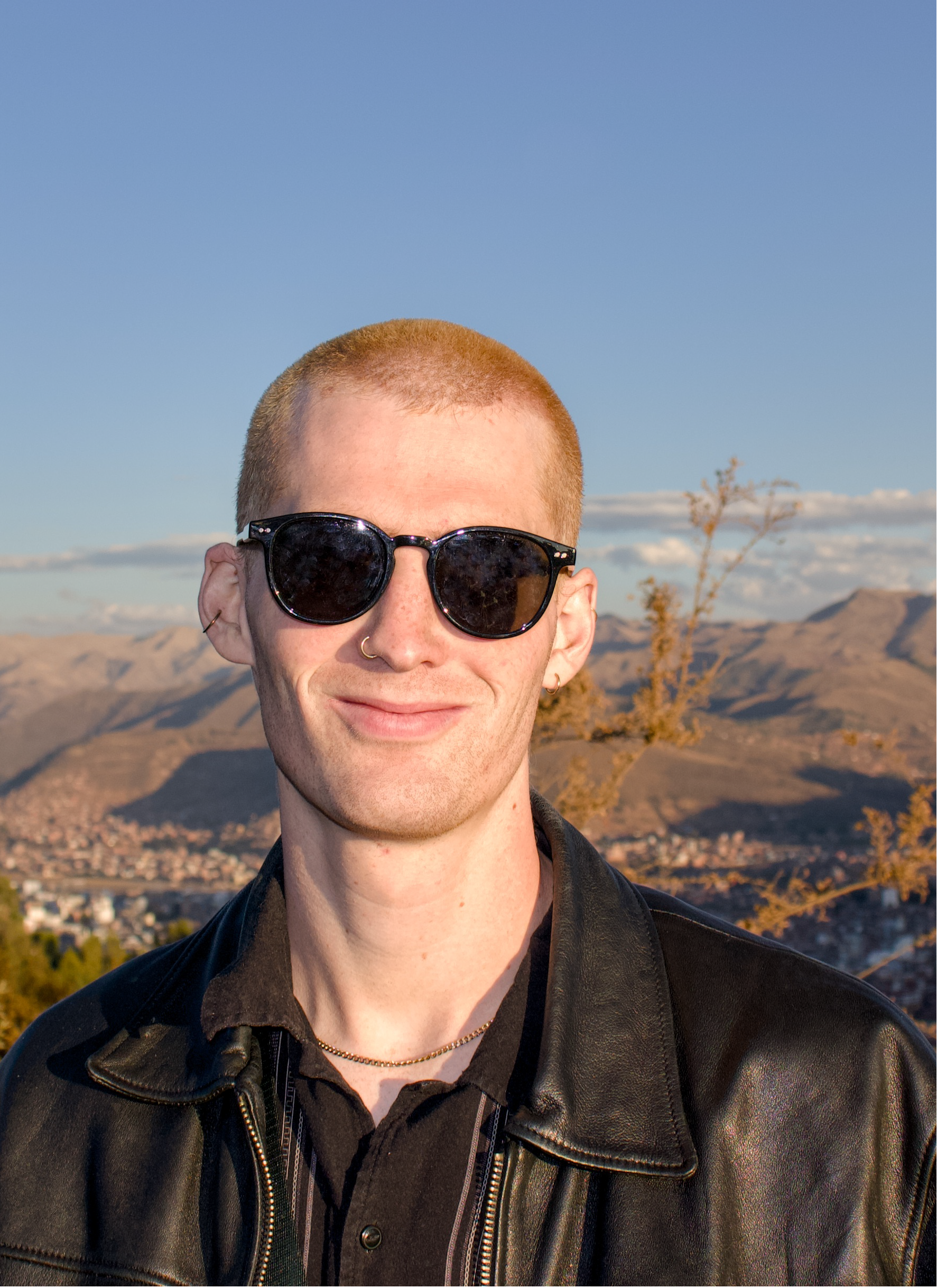
Portrait of Dr. Grant R. Nickles

Fungal Chemical Ecology and Evolution

Grant R. Nickles, PhD

UW Distinguished Research Fellow

I study the chemical ecology and evolution of fungi: how the molecules they make shape their interactions, and how that chemistry is encoded and evolves across fungal genomes. Much of my work centers on non-canonical specialized metabolism, the chemistry that conventional genome mining tends to miss, in the fungi most researchers overlook.

Wisconsin RISE AI · College of Agricultural & Life Sciences, University of Wisconsin–Madison

About

Research interests

I am interested in non-canonical fungal specialized metabolism, which to me broadly encompasses two ideas. The first is natural products whose genetic basis is poorly understood or unpredictable by conventional genome mining. The second is taxa that natural-product researchers have conventionally understudied or ignored, such as Basidiomycetes and lichens.

My work in this space is deliberately diverse. It combines computational genome mining and molecular evolution with chemical analysis in the lab. The common goal across these projects is to use understudied fungal lineages and overlooked chemistry to define new specialized-metabolism lineages and improve how we understand biosynthesis across the fungal kingdom.

I am always open to new collaborations on fungal natural product biosynthesis and evolution, so please get in touch.

Research

Research projects

My research spans several connected projects in fungal specialized metabolism. The main threads are described below.

01

The evolution & genomic architecture of non-canonical fungal specialized metabolism

Mapping natural products that are invisible to conventional genome mining, found in lineages such as Basidiomycetes and lichens that natural-product researchers have long passed over.

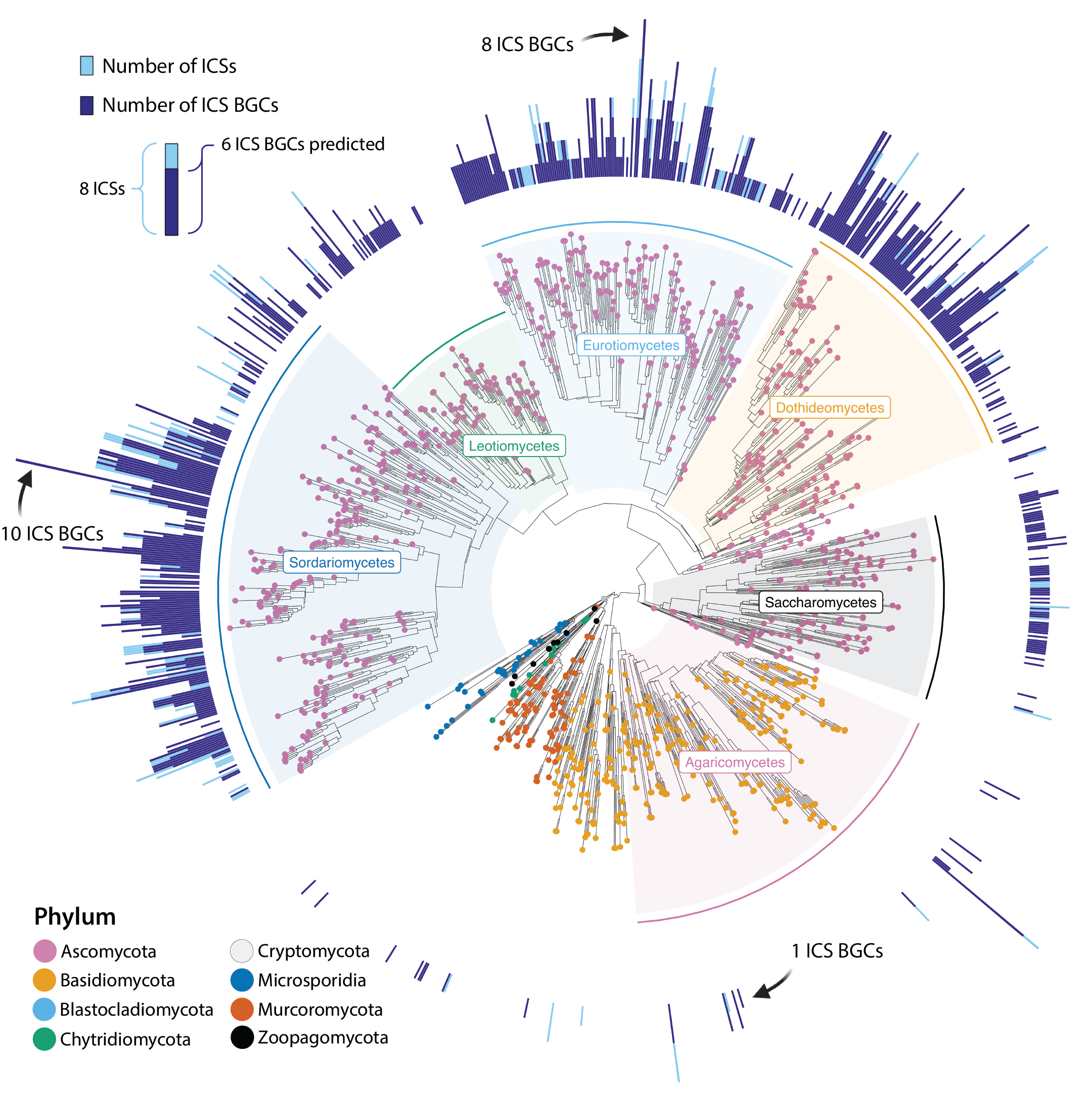
Isocyanide synthase gene clusters mapped onto a fungal phylogeny
Published · Nucleic Acids Research

Mining for a new class of fungal natural products

The first large-scale characterization of isocyanide synthase (ICS) biosynthetic gene clusters, a class of fungal natural products previously invisible to conventional genome mining. My pipeline located over 3,800 ICS clusters, ranking them the fifth-largest class of fungal specialized metabolites. The antiSMASH team later built ICS detection into version 7.1 of their genome-mining tool.
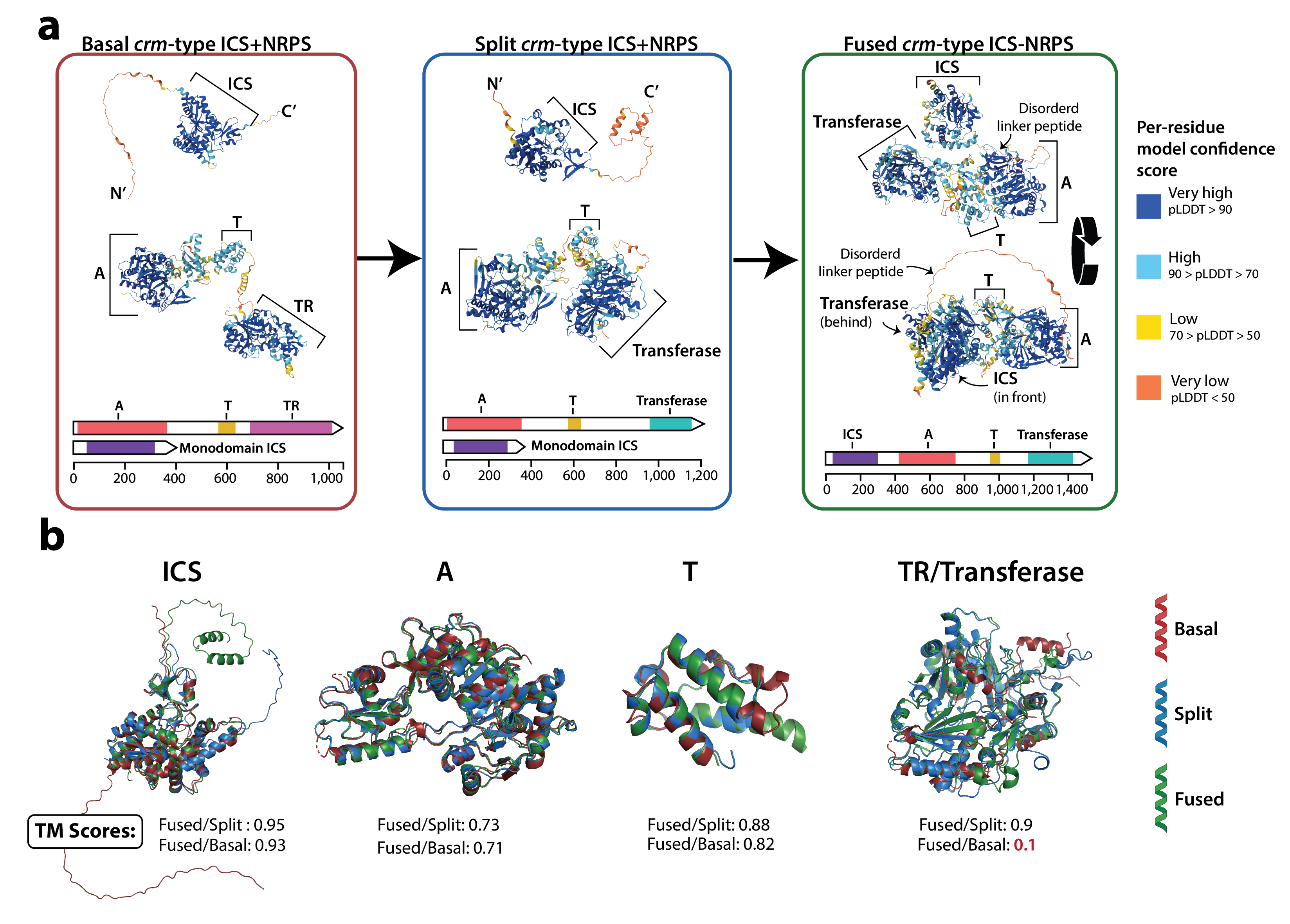
Proposed evolutionary steps of an isocyanide megasynthase
In press · Current Biology

Stepwise evolution of a fungal mega-synthase, told through lichen genomes

An unusual split version of the antibiotic-producing CrmA isocyanide mega-synthase, found in lichen genomes, where the ICS and NRPS domains are encoded by two separate genes. I traced the split pathway across a wide range of fungi and back to a duplication of a canonical NRPS-like gene family, showing how understudied lineages can reveal entirely new specialized-metabolism pathways.

In press Preprint PDF
Amanita muscaria genomes and metabolomes figure
Published · New Phytologist

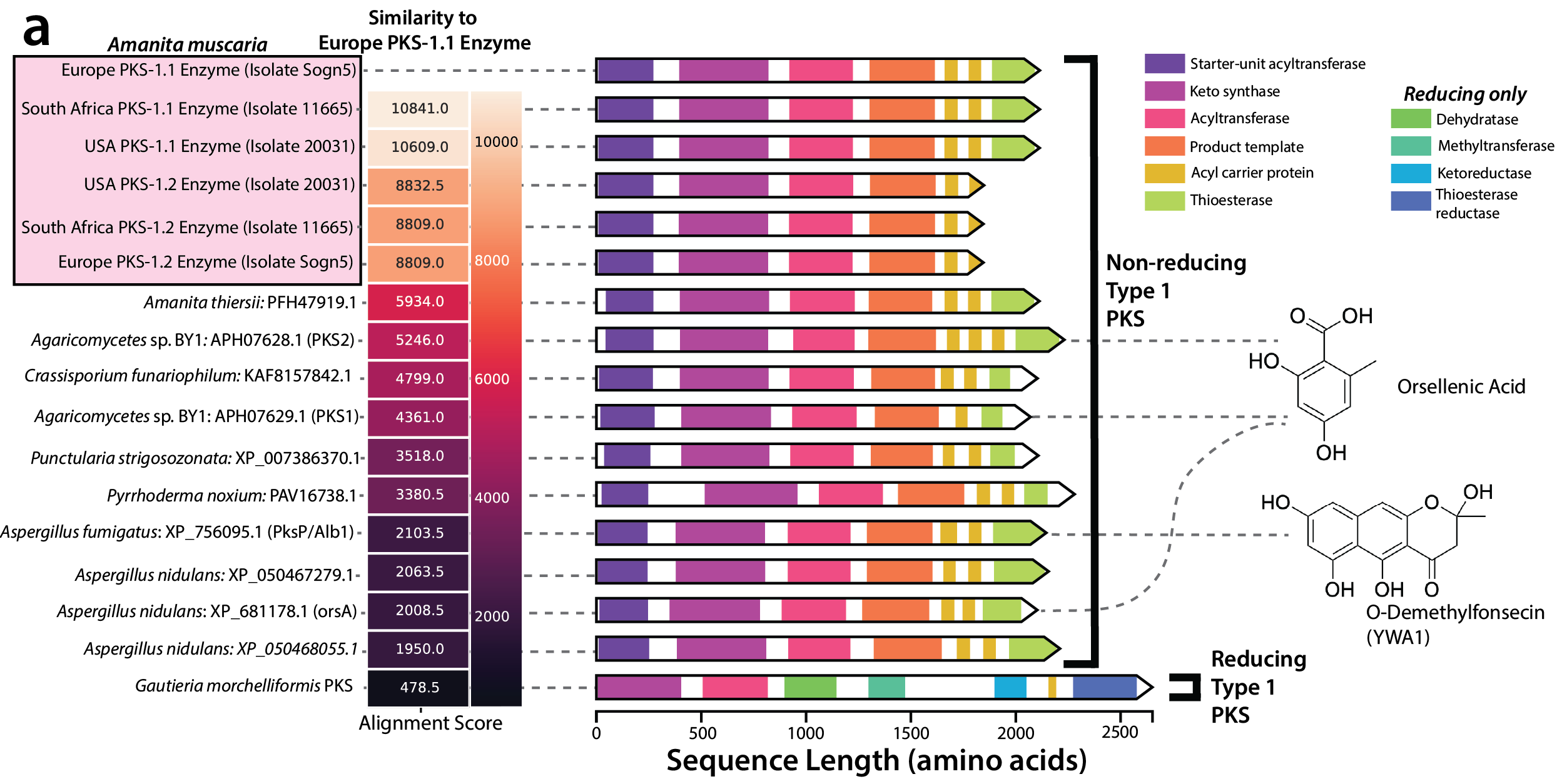
The invasion of Amanita muscaria in South Africa

Born from an NSF-funded workshop in Pretoria, this study sequenced 24 Northern and Southern Hemisphere fly agarics to reconstruct the South African history of Amanita muscaria. I analyzed the specialized metabolomes by genome mining and LC-MS/MS, and led bioactivity testing of extracts against eight organisms, showing the European chemistry is conserved in its novel range.

02

The Aspergillus fumigatus Af293/CEA10 Community Sequencing Initiative

The model pathogen A. fumigatus (strains Af293 and CEA10) has been studied for decades. Because these strains were cultured independently in labs across the globe, they have accumulated unique, unstudied mutations. This "lab-to-lab" evolution makes it hard to compare findings on physiology, pathogenicity, and genetics across labs.

While community sequencing is common for other model organisms (Arabidopsis, S. cerevisiae, various bacteria), this is the first effort of its kind for a filamentous fungus. I launched the initiative with Drs. Amelia Barber, Emile Gluck-Thaler, and Dante Calise to build a foundational genomic resource for the entire Aspergillus community.

Visit the initiative
03

Mobile elements and the evolution of fungal specialized metabolism

Starships are among the largest known mobile genetic elements in fungi and a research focus of my advisor, Dr. Emile Gluck-Thaler. Working with him, I study how these elements move across genomes and carry biosynthetic and regulatory machinery with them.

Fungal-kingdom-wide

Starships and biosynthetic gene clusters

A fungal-kingdom-wide analysis of Starships and their role in the evolution, diversity, and distribution of biosynthetic gene clusters.

In collaboration with the Marnix Medema lab, one of the largest natural-product genome-mining groups, and Dr. Nancy Keller.

Gene regulation

Starships and host gene regulation

An investigation of what happens after a Starship inserts into a new genome, focusing on how the genes it carries integrate into the host's existing transcriptional regulation.

In collaboration with Dr. Nancy Keller.

Tools & Software

Resources I have built

Open tools and databases that come out of my research and are free for the community to use.

Web app · Beta

ResearchOS

I built ResearchOS, a free and open-source application that helps academic labs keep their projects, protocols, notes, tasks, and sequence data organized in one place. It runs locally in your browser against your own data folder, so your research stays on your own machine, and it includes a built-in molecular sequence editor and common lab calculators.

Web resource

Fungal ICS BGC browser

A public website for exploring and downloading the more than 3,800 isocyanide synthase biosynthetic gene clusters identified across the fungal kingdom, built alongside my Nucleic Acids Research study.

Publications

Selected work

A selection of recent first-author work. For the complete, up-to-date list and citation metrics, see my Google Scholar profile.

2026
Equipped for success: genomes and metabolomes of the European Amanita muscaria are conserved in its novel South African range
Nickles GR, Stokes CK, Narh DL, et al., Drott MT, Pringle A.
New Phytologist 250, 1863–1883.
2026
Reconstructing the evolution of a key fungal isocyanide megasynthase using genomes of lichenized fungi
Nickles GR, et al.
Accepted at Current Biology, in press (expected June 2026).
In press Preprint PDF
2023
Mining for a new class of fungal natural products: the evolution, diversity, and distribution of isocyanide synthase biosynthetic gene clusters
Nickles GR, Oestereicher B, Keller NP, Drott MT.
Nucleic Acids Research 51(14), 7220–7235.

Contact & CV

Get in touch

I'm always interested in collaborations on fungal natural product biosynthesis and evolution. Reach out anytime.

Around the web

Memberships

Member, Genetics Society of America (GSA)

Curriculum Vitae

Last updated November 2025

Download CV (PDF)